A Guide for Self Publishers Canada to Succeed
A Guide for Self Publishers Canada to Succeed
Think of this guide as your practical roadmap. We’re going to take that manuscript sitting on your laptop and walk through how to turn it into a professionally printed book that readers can actually buy.
Your Path to Publishing Success in Canada
When you decide to self-publish, you’re taking the driver’s seat of your own creative and business career. Forget the long waits and gatekeepers of the traditional publishing world. Self-publishing gives you a direct line to your audience, complete creative control, and a much larger slice of the royalties. It’s not just an artistic project; it’s the launch of your own small business.
This guide is built to cut through the confusion and show you exactly how it’s done here in Canada. We’ll go through all the crucial, country-specific steps every author needs to know. From the legal nuts and bolts to the final marketing push, you’ll walk away with the confidence to make the smart decisions that give your book its best shot at success.
What You Will Learn
We’ve broken down the entire self-publishing journey into a clear, actionable plan. Here’s a look at what we’ll cover:
- Canadian Publishing Essentials: How to get your free ISBN directly from Library and Archives Canada and what you need to know about your legal deposit requirements.
- Smart Print and Production: We’ll help you figure out if offset, digital, or inkjet printing is right for you and how to decide on a print-run size that matches your budget and sales goals.
- Distribution and Fulfillment: Building a real-world strategy to get your book listed on major online stores and into the hands of physical booksellers across the country.
- Marketing and Launch Logistics: How to craft a promotion plan that actually connects with Canadian readers and builds real buzz for your book launch.
By the time you’re done with this guide, you won’t just know the steps—you’ll have a concrete plan. And remember, you don’t have to figure it all out by yourself.
Partnering with the right people, especially a dedicated Canadian printer, can take a huge weight off your shoulders. A local partner gets the market, makes shipping a breeze, and ensures the book you hold in your hands looks and feels professional. With the right strategy and support, your publishing dream is absolutely within your grasp.
Getting Your Book Ready for the Canadian Market
Before you even start thinking about printers or what your cover will look like, there are a few uniquely Canadian hurdles to clear. Think of these as the official paperwork that turns your manuscript into a legitimate, sellable book.
Getting these details sorted out early on isn’t just about ticking boxes. It’s about setting your book up for success, making sure it can be found, ordered, and protected across the country. The good news? For Canadian self-publishers, it’s surprisingly simple and mostly free.
Claim Your Free Canadian ISBN
Your book’s ISBN (International Standard Book Number) is its passport to the world of commerce. It’s a unique 13-digit code that booksellers, libraries, and distributors use to identify and track your book. Without one, you’re essentially invisible to the entire retail system.
Here’s a fantastic perk for us Canucks: you can get your ISBNs completely free from Library and Archives Canada. In the US, authors have to buy them, but our government provides them at no charge to support Canadian creators.
A few things to keep in mind:
- You need an ISBN for each format. Your paperback needs one, your hardcover needs another, your EPUB needs its own, and so on. They aren’t interchangeable.
- You become the publisher of record. When you apply for your own ISBN, your name or your publishing imprint is officially listed. This gives you full control over your book’s metadata—a critical piece for long-term management.
- Don’t leave it to the last minute. The online application is easy, but it can take up to 10 business days for your request to be processed. Get this done well ahead of your launch schedule.
Fulfilling Your Legal Deposit Duty
Once you’ve published a book with a Canadian ISBN, you have a legal obligation to send a copy or two to Library and Archives Canada. This is part of the Legal Deposit program, which exists to preserve our national literary heritage.
This isn’t just a chore; it’s a mark of legitimacy. Your book becomes part of Canada’s permanent collection, discoverable for generations to come. It’s a pretty cool way to leave a legacy.
You’ll need to send one or two finished copies, depending on the size of your print run. The only cost to you is the price of printing those books plus shipping. They also have a straightforward process for submitting digital files, which is often easier.
My Two Cents: Don’t skip this. The Legal Deposit program is mandatory, but more importantly, it’s a powerful way to cement your book’s place in Canadian literary history.
What About Copyright in Canada?
Here’s some good news: in Canada, copyright is automatic. The second you write something original, it’s legally yours. You don’t have to file any paperwork for your manuscript to be protected under the law.
So, why would you consider formally registering it?
Registering your copyright with the Canadian Intellectual Property Office (CIPO) gives you a certificate that acts as undeniable proof of ownership. If you ever find yourself in a situation where you need to defend your work against infringement, that piece of paper makes your life a whole lot easier. It creates a public record that says, “This work belongs to me.”
While there is a government fee for registration, many self-publishers find the peace of mind is well worth the modest investment.
Making Smart Print and Production Decisions
Figuring out how to physically produce your book is one of the most critical decisions you’ll make. It’s a choice that directly hits your upfront costs, the quality of your finished book, and, ultimately, your profit margins. For self-publishers in Canada, the options are more flexible than ever, and we’re long past the days when you had to order thousands of copies just to get your foot in the door.
The real key is to match the printing technology to your specific book and your goals. A glossy, full-colour photography book has completely different needs than a standard black-and-white novel. Your decision will really come down to your budget, how many copies you realistically think you’ll sell, and the kind of reading experience you want to create.
Choosing the Right Print Technology
There are three primary technologies to consider: offset lithography, digital toner, and inkjet (or high-speed digital). Each has its own sweet spot.
- Offset Lithography: The gold standard for large print runs, typically 1,500+ copies. It offers the best per-unit cost at volume and delivers outstanding colour quality and consistency. The setup costs are higher, so it’s not cost-effective for very small quantities.
- Digital Toner: Perfect for short runs, from a single copy up to about 500. There are virtually no setup costs, making it ideal for print-on-demand (POD) or test runs. Quality is excellent, though colour matching on large runs won’t be quite as consistent as offset.
- Inkjet (High-Speed Digital): This bridges the gap. It offers near-offset quality at the speed and flexibility of digital. It’s increasingly popular for mid-range runs, often in the 500–2,000 copy sweet spot, giving you a great balance of cost and quality.
How Many Should I Print?
For a first-time self-publisher, the temptation to print thousands of copies is strong but usually misguided. A smarter approach is to start with a conservative run that covers your immediate needs—pre-orders, launch events, initial distribution—and then reprint based on actual demand.
A good starting point for many Canadian authors is 250–500 copies using digital or inkjet printing. This minimizes your financial risk while giving you enough stock to launch effectively. As you gain traction and better understand your sales velocity, you can move to larger offset runs for better per-unit economics.
Building Your Canadian Distribution Strategy
Getting your book printed is a major achievement, but it’s only half the battle. The other half is getting it into the hands of readers. For self-publishers in Canada, building a distribution strategy requires a multi-pronged approach that covers both online channels and physical retail.
Selling Online
Your primary online channels will be Amazon.ca and Indigo/Chapters (indigo.ca). Amazon KDP (Kindle Direct Publishing) offers direct access to its marketplace for both print and ebook editions. For Indigo, listing your book requires working through a distributor or using their consignment model for local authors.
Don’t overlook your own website as a sales channel. Platforms like Shopify (a Canadian company!) make it easy to set up an online store. Selling direct gives you the highest margins and a direct relationship with your readers.
Getting Into Bookstores
Independent bookstores are often the most receptive to local authors. Walk in, introduce yourself, and offer to do a reading or signing. Many are happy to carry local titles on consignment.
For broader retail distribution, consider working with a Canadian distributor. They have established relationships with chains and independent stores and can get your book into their ordering systems. This comes at a cost (typically 55–65% off the retail price), but it’s the most efficient way to achieve wide physical distribution.
Marketing Your Self-Published Book in Canada
Marketing is where many self-publishers stumble. The good news is that you don’t need a massive budget—you need a smart plan. For Canadian authors, leaning into your local identity is a significant advantage.
Weave your Canadian identity into your marketing. Talk about your city, set your stories in familiar locations, and make connections with Canadian book bloggers, podcasters, and media.
Self-publishing in Canada has also shed its old stigma, with indie authors now winning major awards like the Canadian Book Club Awards and the Whistler Independent Book Awards. Data from BookNet Canada shows Canadian-authored books account for 11.86% of the country’s $1.1 billion book market. Better yet, 30% of readers are now actively consuming local content—a significant jump from 24% in 2012. For indie authors, this shift is paired with much higher royalties (45–97% versus the traditional 2–10%) and total creative control.
Crafting a Strategic Pre-Launch Plan
The weeks leading up to your release date are absolutely critical. This is your window to build buzz and ensure you have strong momentum right out of the gate.
- Hunt for Early Reviews: Get in touch with Canadian book bloggers, prominent Goodreads reviewers, and influencers in your genre. Offer them an Advance Reader Copy (ARC) for an honest review posted on or around your launch day.
- Plan a Launch Day Push: Rally your email subscribers and social media followers. Ask them to buy the book and leave a review within the first 24 to 48 hours.
- Host a Launch Event: Organize a virtual party on Facebook or Instagram Live, or see if a local independent bookstore will host you for an in-person signing.
Remember, marketing doesn’t stop once the book is out. Sustained effort—from running the occasional price promotion to staying active online—is what gives a book a long and successful life.
Partnering with a Canadian Printer for Long-Term Success
Choosing a printer isn’t just about getting ink on paper; it’s one of the most important partnerships you’ll form in your publishing career. When you find the right Canadian book manufacturer, you’re not just hiring a vendor. You’re gaining a partner who gets the local market and offers services that simplify your entire operation.
This kind of relationship helps self publishers in Canada bring everything under one roof. Imagine not having to coordinate separate vendors for printing, warehousing, and shipping. A full-service partner handles all of it, which gets your book to market faster, lowers your supply chain costs, and saves you from the notorious headaches of cross-border logistics.
THE Marquis publishing solutions ecosystem
The best local partners do a lot more than just run the presses. They provide a whole suite of services built to help you grow.
- Easy Online Ordering: Modern platforms like Marquis Express let you manage everything from one dashboard—check inventory levels, track print runs, and order more copies with a few clicks.
- Inventory Management: You never want to run out of stock, especially during a big promotion. Automatic stock replenishment systems can monitor your inventory and print more books when you’re running low, so you never miss a sale.
- Graphic Design Support: If your cover or interior layout needs a professional touch, having in-house experts available can be a lifesaver.
The right Canadian partner brings more than industrial capacity to the table; they offer specialized expertise. They handle the complex logistics of production and distribution, freeing you up to focus on what you do best: writing and marketing incredible books.
It’s a great time to be an indie author in Canada. Local contributors, including self-publishers, already command a respectable 11.86% of the $1.1 billion Canadian book market. This growth is being fuelled by print-on-demand and short-run printing, which means authors no longer need to risk a fortune on a massive initial print run.
With thousands of new books published in Canada every year, more and more are coming from indie authors who rely on these integrated tools. To see how this works in practice, you can explore what a offers.
A Few Common Questions from Canadian Self-Publishers
Jumping into the world of self-publishing brings up a lot of questions. Let’s clear up some of the most common queries so you can move forward with your project confidently.
Do I Really Need to Get My Own ISBN in Canada?
Yes, absolutely. If you’re serious about your author career, getting your own ISBN is a must. Platforms like Amazon KDP might offer you a “free” one, but it comes with a huge string attached: they become the publisher of record, not you.
Owning your ISBN means you own your book’s future. It gives you total control over your metadata and lets you sell your book through any bookstore, library, or distributor you choose, without being locked into one ecosystem.
What’s the Toughest Hurdle for Canadian Self-Publishers?
Without a doubt, the biggest challenge is distribution and discoverability. It’s one thing to print a book; it’s another thing entirely to get it into the hands of readers across our massive country. A successful strategy needs a solid online game plan combined with a realistic approach to physical retail.
———
At Marquis Book Printing, we help Canadian authors manage these challenges every day with end-to-end printing, distribution, and inventory solutions. Find out how we can support your project at .

Measure
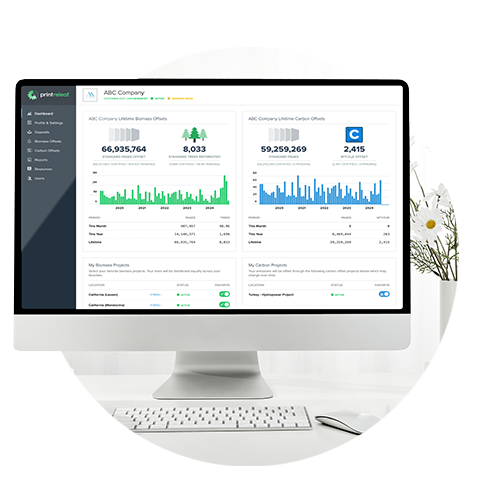
Calculate

Offset
This is a meaningful step forward in aligning our work with the values of today’s eco-conscious readers and helping publishers strengthen their sustainability leadership. We’re excited to lead the way and make it easier than ever to explore sustainable book printing!